Grace Based Parenting: Highlights from a Conference (#GBPFranklin)
This weekend I attended the Grace Based Parenting conference hosted by my church and led by pastor and author Tim Kimmel. Tim’s talks at the conference were based on his book, Grace Based Parenting, in which he argues that we should model our parenting on how God parents us, a relationship with grace at its core. It’s a powerful idea. I’ve certainly developed a better understanding of God as Father since I became a father myself. It hadn’t occurred to me before hearing about this book that I might reverse that connection, becoming a better parent by treating my children more like the ways God treats me. Kimmel didn’t spend as much time on this idea during the conference as I thought he might, but he did offer a wealth of advice, both conceptual and practical, on parenting. A few highlights…
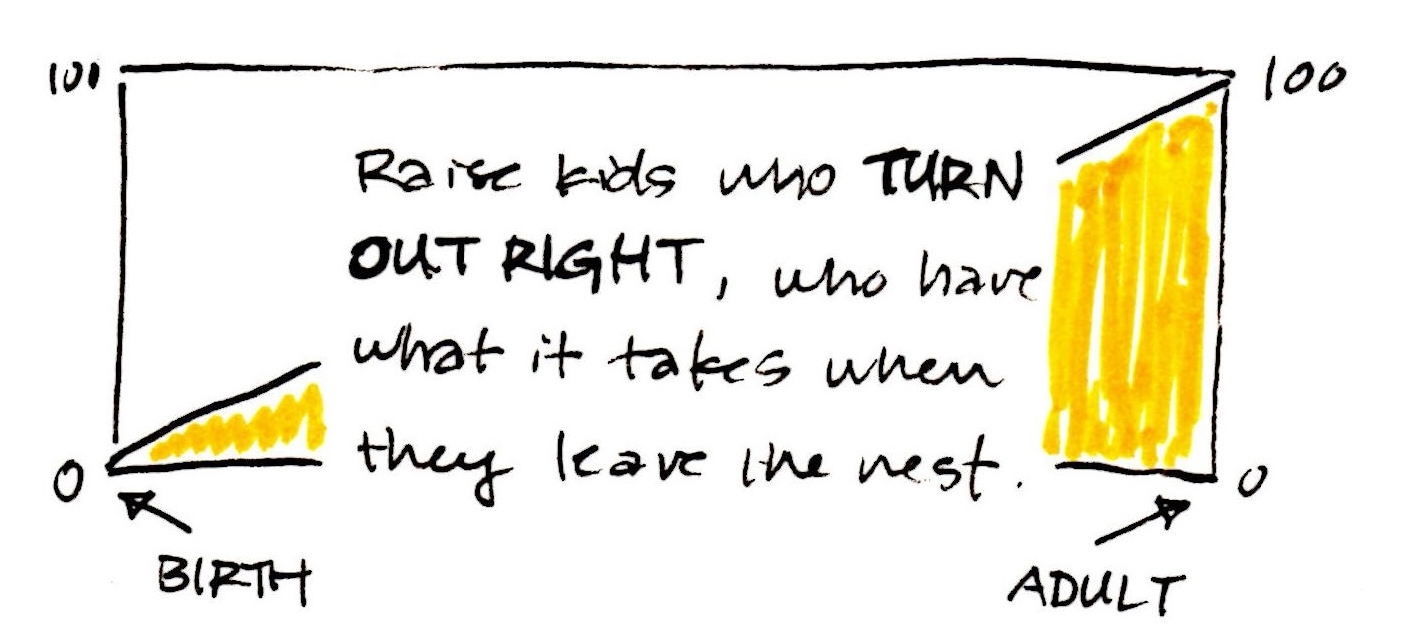
At one point on the first night of the conference, Dr. Kimmel encouraged us to raise kids who “turn out right,” who have what it takes when they leave the nest. I was reminded of my own father’s parenting philosophy, which I summarized in a Father’s Day post here on the blog last year:
Dad told me once that his job was to take an infant who was entirely dependent on others and, within 18 years, help that child become someone who could live independently. Living independently involves more than being able to feed and clothe oneself–it means being able to navigate the world on one’s own and to make good choices for oneself. I don’t think I was quite there by age 18, but that wasn’t his fault. Dad was intentional about giving me more and more independence as I grew up. He knew that meant that I needed the opportunity to make some bad choices now and again and to suffer the consequences for those choices. But he made sure that those were consequences I could handle. I see my job as a father the same way, helping my girls making more and more choices (good ones, I hope) on their own so that when they leave the nest, they’re capable of flying by themselves.
I doodled a version of this philosophy in my notes Friday night at the conference:
The next morning when we came back to this idea, what do I see in the conference workbook? Basically the same diagram!
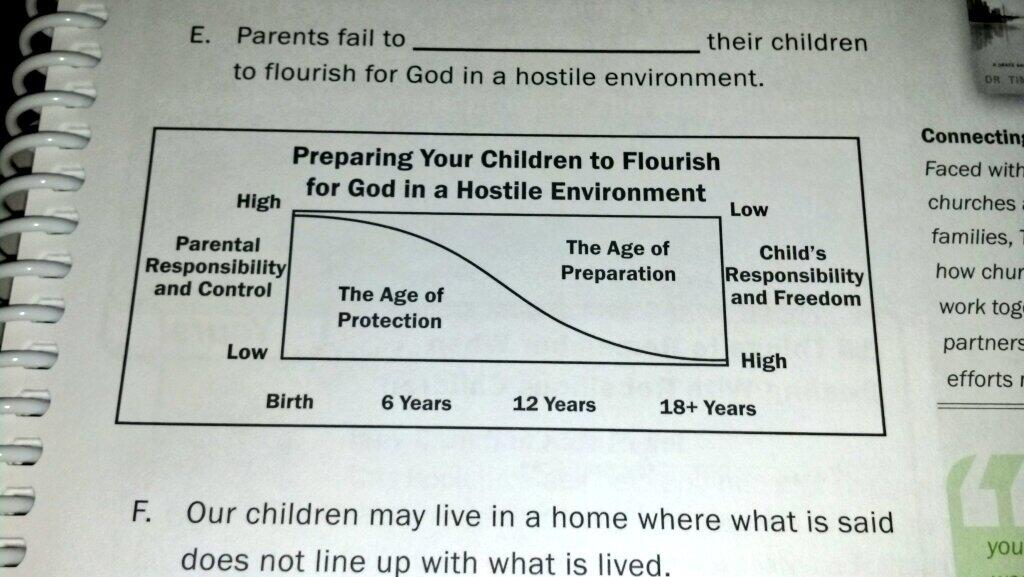
I was glad to hear Dr. Kimmel echoing my dad’s parenting philosophy. I’m a better man because my father didn’t try to keep me from making choices as I grew up, even bad choices. And I’m a better father because my dad shared his philosophy with me many years ago. I hope that other fathers embrace this idea. It’s not easy to implement, since it’s often challenging to know where to draw the line between freedom and control. But having the long view, seeing one’s job as preparing one’s kids to stand on their own one day, makes those tough calls a little easier.
(Aside: Dr. Kimmel’s definition of kids who “turn out right,” that they have what it takes when they leave the nest, also reminded me of the question with which every man must grapple, according to John Eldridge in his book Wild at Heart: Do I have what it takes? Reading, years ago, about the importance of that question and how it plays out across a man’s life has helped me understand myself in so many ways.)
(Aside to the aside: Correcting my own grammar just now, as I wrote the above paragraph, reminded me that there really needs to be a hyphen between “Grace” and “Based” in Grace Based Parenting. I keep mentally inserting it every time I type that title…)
Dr. Kimmel identified six character traits for us to build into our kids: faith, integrity, discipline, endurance, courage, and poise. He noted that “poise” isn’t used in the Bible, but the term does a good job of capturing a number of ideas found there. He used the metaphor of a carpenter’s level: You need to keep the bubble in the middle.
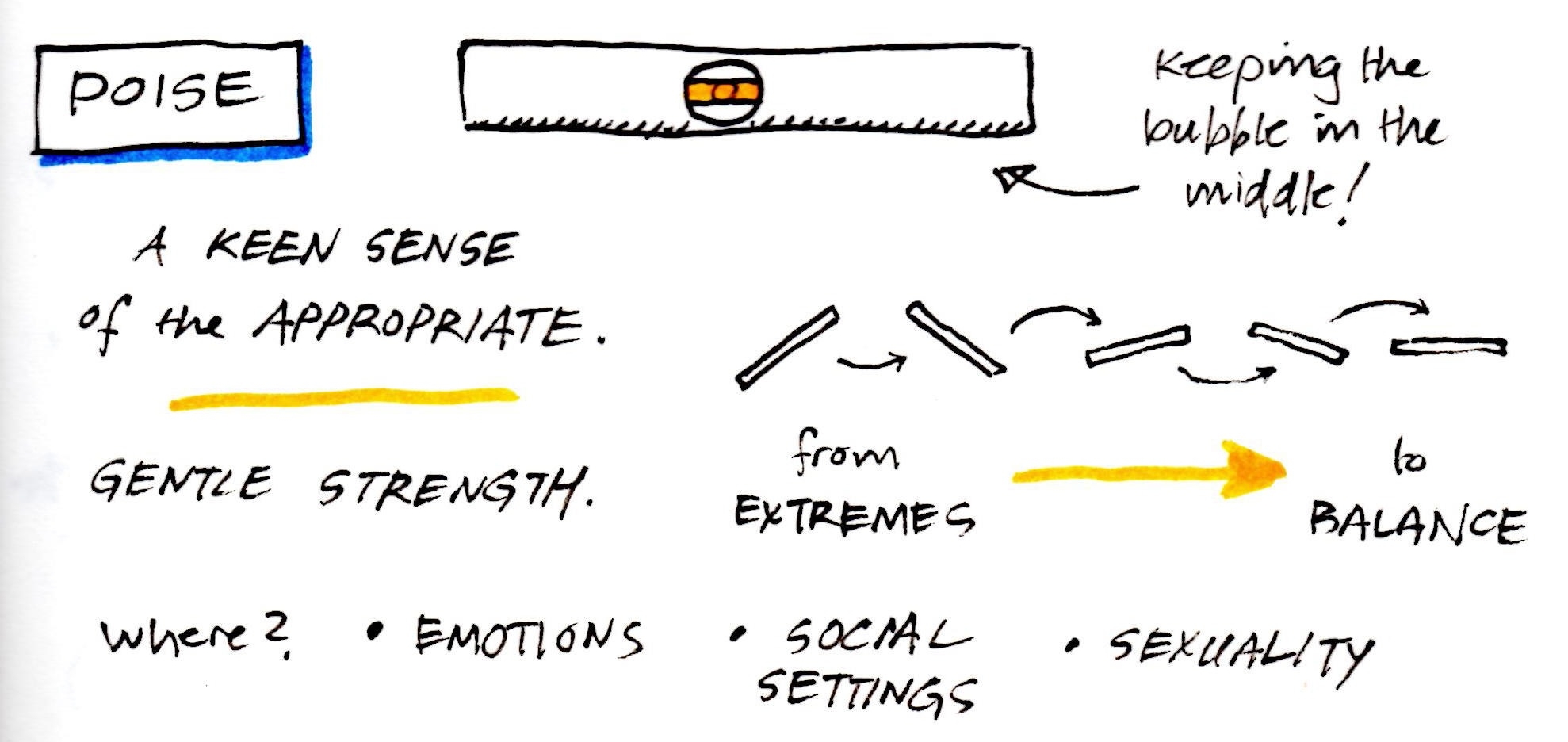
Kids are always bouncing from one extreme to another, and part of our job as parents is to help them learn how to balance themselves. Dr. Kimmel described poise as having “a keen sense of the appropriate,” something that requires “gentle strength.” He put words to what had been for me only a vague idea up until now. I want my children to learn how to figure out when too much of a good thing is actually a bad thing, to learn when they need to dial it down a bit. I want them to realize that life’s not black and white, that extremes in any area of their lives can have downsides.
- That’s a great book, but you can’t stay up past midnight reading it.
- She’s a wonderful friend, but you can’t spend all your time with her to the exclusion of other friendships.
- You should be proud of your accomplishments, but not so proud that you boast.
- You should stand up for yourself, but sometimes you have to pick your battles.
In the section on character traits, the conference workbook included lists of very practical tips for developing these traits in your kids. Some examples with commentary:
- Faith – Let them find you reading your Bible every morning when they arise. [I’m afraid my kids don’t see me practicing any spiritual disciplines on a regular basis.]
- Integrity – Pick a story out of the newspaper about someone who committed a crime and ask your children’s opinion about it. [I still subscribe to the print edition of our local newspaper; I might as well as put it to good use!]
- Poise – Fathers, take your daughter through a fashion magazine and discuss modesty with her. [Not sure I’m ready for this, but I think it’s important that fathers help their daughters think about such things.]
- Discipline – Enroll them in a team sport where their faithful attendance and participation is required. [My girls have to have a pretty good reason to skip soccer practice. I want them to honor their commitments to themselves and their teammates.]
- Endurance – Have them read a classic in a reasonable time limit. Establish a reward for them if they finish on time. [I’d like my little readers to know the payoff from finishing a long book.]
- Courage – Regularly spend time working with your children at an inner city ministry or Rescue Mission. [Dr. Kimmel said that this is one of the best things you can do for your family.]
We didn’t have much time during the conference to spend on these lists, so my plan is to read through them and make some plans / goals for the next few months. I’m okay at responding to character situations that arise for my girls. I’d like to get better at being proactive in this area.
Dr. Kimmel shared many more great ideas at the conference. See my sketchnotes (part one and part two) for more highlights. I’m glad I went, and I’m glad my church hosted it. My only critique of the event is that there wasn’t any discussion built into the conference. As much as I appreciated hearing from Dr. Kimmel, I was hoping that the conference would provide me an opportunity to meet and learn from other parents. That’s something I’m determined to build into my life in the near future.